


There’s a running joke among slow living enthusiasts: the philosophy sounds absolutely dreamy until you’re standing in a subway car at 8 a.m., wedged between a stranger’s briefcase and someone else’s aggressive perfume. How exactly are you supposed to savor the moment right now?
It’s a fair question. Slow living, at first glance, seems tailor-made for cottagecore aesthetics — linen aprons, sourdough starters, vegetable gardens, and afternoons with no particular agenda. But the truth is, the philosophy has always been more about intention than location. And for the millions of people living in cities, that distinction matters more than ever.
Urban life is genuinely fast. There’s no softening that reality. But fast-paced doesn’t mean slow living is off the table — it just means it requires a little more deliberate effort to practice. Here’s why it still works, and more importantly, how to actually make it happen.
What Slow Living Actually Means (It’s Not What Most People Think)
Before anything else, it’s worth clearing up a persistent misconception. Slow living is not about doing everything slowly, moving to the countryside, or opting out of ambition. It’s not a rejection of productivity or a romanticized escape from modern life.
At its core, slow living is about intentionality — choosing how you spend your time, energy, and attention rather than letting your environment make those choices for you. The “slow” in slow living refers to pace of mind, not pace of feet.
The movement grew out of the Slow Food movement, which started in Italy in the late 1980s as a protest against fast food culture. From there, the philosophy expanded into lifestyle territory, eventually influencing conversations around work, travel, consumption, and daily routine. A 2021 exploratory study on slow living found that participants consistently described the practice not as a withdrawal from the world, but as a more conscious engagement with it.
That framing changes everything for city dwellers. You don’t have to change your zip code to live more slowly. You have to change your relationship with your own attention.
Why Cities Actually Make Slow Living More Necessary — Not Less Possible
Here’s a perspective shift worth sitting with: urban environments might be the places where slow living is most urgently needed, and therefore most valuable to practice.
City life is relentless by design. The average urban resident makes hundreds of micro-decisions daily — navigating crowds, managing noise, absorbing advertising, juggling digital and physical demands simultaneously. Research from the University of Michigan has found that environments with constant stimulation deplete cognitive resources faster, leading to decision fatigue, stress, and reduced capacity for meaningful thought.
In other words, the city is exactly the kind of environment that benefits most from slow living principles. The contrast isn’t a problem — it’s the point. Practicing intentionality in a chaotic setting isn’t harder in the long run; it’s just more visible when you’re doing it, and more noticeably absent when you’re not.
The Myth That You Need Quiet to Be Present
One of the biggest barriers city dwellers face is the belief that presence requires silence. It doesn’t. Mindfulness traditions from Buddhism to Stoicism have long been practiced in urban, community settings — ancient Rome, feudal Japan, bustling medieval markets. The idea that inner stillness depends on outer quiet is relatively recent and largely cultural.
Plenty of people find genuine moments of presence in the middle of city noise — in the rhythm of a long commute, in the ritual of making coffee before the apartment building wakes up, in the particular quality of light on an urban street at 6 a.m. The city offers its own kind of texture and beauty, if you’re looking for it.
Practical Ways to Practice Slow Living in an Urban Environment
Talking about slow living philosophically is useful, but most people want to know what it actually looks like on a Tuesday. Here are approaches that genuinely translate to city life — not idealized versions of it.
Create Anchor Rituals, Not Routines
There’s a difference between a routine and a ritual. A routine is something you get through. A ritual is something you’re actually present for. Slow living in a city often starts with identifying one or two daily anchor points — small, consistent practices that pull you back into intentional awareness.

This might look like:
- Making your morning coffee or tea without your phone anywhere near you
- Taking a specific route to work that you actually enjoy, even if it’s slightly longer
- Eating lunch away from your desk, without screens, even for fifteen minutes
- Spending the last ten minutes before sleep without any device in hand
None of these require extra time. They require redirected attention — which is a fundamentally different ask. If you’re looking for ways to bring more presence to everyday moments, the good news is that the opportunities are already built into your day.
Rethink Your Relationship With Commuting
For city dwellers, the commute is often treated as dead time — something to survive via podcasts, scrolling, or low-grade anxiety about the day ahead. But it’s also one of the most consistent pockets of unscheduled time in many people’s lives.
Some people find that treating the commute as protected thinking time — no inputs, just observation — becomes one of the most reliably grounding parts of their day. Others use it for a single, focused listen (one podcast episode, one album from start to finish) rather than mindless scrolling. The shift from passive consumption to active choice, even in a small way, is slow living in practice.
Consume Less, But More Consciously
Cities are consumption machines. The density of options — restaurants, shops, events, experiences — creates a low-grade pressure to always be doing, buying, or optimizing. Slow living pushes back on that by encouraging quality over quantity.
This doesn’t mean austerity. It means choosing one good restaurant you love over six mediocre ones you’ve heard about. It means buying fewer things, but things you actually care about. It means saying no to the event you don’t really want to attend so that you can be fully present at the one you do.
Urban environments make this hard because options are always visible. But that visibility is also what makes conscious choosing feel so satisfying when you do it.
Find Your Slow Spaces Within the City
Almost every city, no matter how dense, has pockets of slowness if you look for them. These become anchors for the slow living mindset — places you return to intentionally, not just when you accidentally wander past them.
Common examples include:
- Parks and green spaces — even small ones, visited at off-peak hours
- Independent bookstores and libraries — naturally slower-paced environments
- Farmers markets — tactile, sensory, and built around a different pace of exchange
- Older neighborhoods with architecture and street life that rewards looking up
- Museums and galleries visited slowly, seeing fewer things more fully
The goal isn’t to escape the city — it’s to find the city’s slower layers, which are always there, just less aggressively marketed than its faster ones.
Does Slow Living Work If Your Job Is Inherently Fast-Paced?
This is one of the most commonly asked questions about slow living in urban contexts, and the honest answer is: yes, but it requires compartmentalization rather than transformation.
Not every part of your life can or should operate at a slow pace. Deadlines are real. Emergencies happen. Some industries run fast because the work demands it. Slow living doesn’t ask you to change your job description — it asks you to be more intentional about the parts of life you do have control over.
Research on work-life balance consistently shows that how people spend their non-work hours has an outsized effect on overall wellbeing — often more than the hours themselves. Two people working identical high-pressure jobs can have radically different experiences depending on whether their time outside work is intentional or just more noise. Even small adjustments to how you structure your personal time can shift that balance more than you’d expect.
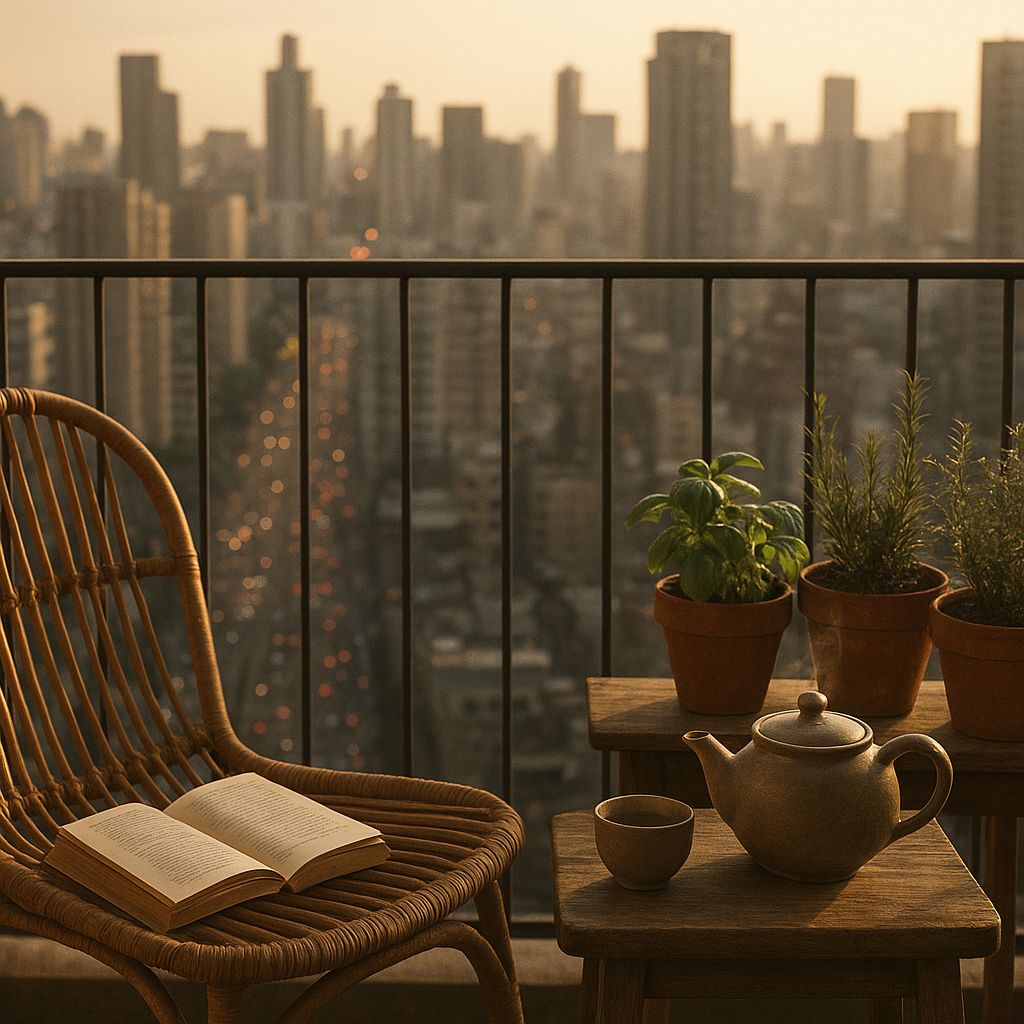
That’s the opening slow living creates for fast-paced professionals. The goal isn’t a slower career. It’s a life where the parts of your day you own are genuinely yours.
Setting Boundaries as a Slow Living Practice
One underappreciated aspect of slow living in professional urban contexts is the role of boundaries — specifically, the boundary between work time and personal time. In a city culture where hustle is often glamorized and being busy is a social currency, protecting personal time is a quiet but significant act of intentionality.
This might mean turning off work notifications after a certain hour, protecting weekends from low-priority work intrusions, or being honest about calendar commitments. None of these are radical acts, but in aggregate they create the space that slow living actually needs to breathe.
The Social Dimension: Slow Living When Everyone Around You Is Moving Fast
Living slowly in a fast city isn’t just an internal challenge — it’s a social one. When the people around you are operating at a different pace, slowing down can feel conspicuous, even uncomfortable.
City social culture often moves in a particular direction: overscheduled weekends, dinners that feel like networking, activities that are more about experiencing and posting than actually experiencing. Slow living asks you to resist that gravitational pull without becoming preachy or isolated in the process.
The practical answer is usually about quality of connection over quantity of plans. Fewer social commitments, but more present ones. Conversations that actually go somewhere, rather than a rotating door of surface-level catch-ups. This is slow living applied to relationships — and it tends to make those relationships significantly better.
Why the Philosophy Is Built for Exactly This Moment
It’s worth noting that slow living has gained traction precisely because urban life has gotten more intense, not because it’s gotten easier to opt out of. More people are practicing some form of it in cities right now than at any point in recent history — not by moving somewhere quieter, but by making different choices within the environments they already inhabit.
The appeal isn’t nostalgia for a slower era. It’s a practical response to an environment that, left unchecked, will fill every available moment with stimulation, obligation, and consumption. Slow living is, in that sense, a form of self-determination — and cities, for all their intensity, are actually excellent places to practice it, because the contrast makes the choice so vivid.
Bringing It Together
Slow living in a fast city isn’t a contradiction — it’s a practice. It doesn’t require rural geography, a reduced income, or a dramatic lifestyle overhaul. It requires deciding, repeatedly and deliberately, to bring more intention to the time and energy you already have.
The key ideas worth holding onto:
- Slow living is about intentionality, not pace — the city doesn’t disqualify you
- Anchor rituals, not wholesale routines, are the most sustainable entry point
- Urban environments have slow layers — they just need to be sought out
- Professional fast-paced lives and a slow personal life can genuinely coexist
- The social pressure to stay busy is real, but quality of connection usually wins over quantity
- The philosophy is most useful precisely where life is most chaotic
For city dwellers who’ve looked at slow living and assumed it wasn’t for them — it might be more available than it looks. Not as an escape from urban life, but as a way to actually inhabit it.
Leave a Reply